Whole plant
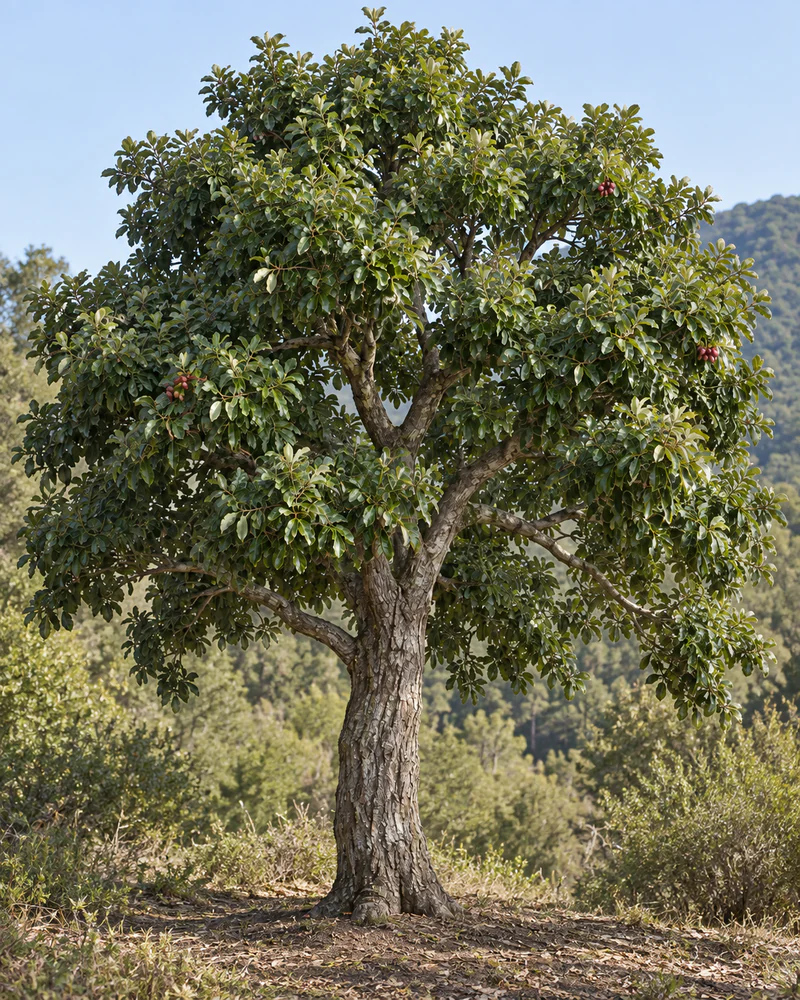
A view of the whole plant. Use the style selector to explore this species as an illustration or a photorealistic image.
The illustrated and photorealistic images were created with AI as visual references. Individual plants may differ in appearance, shape, size, colour and stage of growth.
Tree
Peumo
Cryptocarya alba
An evergreen tree of sclerophyll forest, with aromatic leaves and reddish fruit.
Botanical description
About this species
Peumo is characteristic of Chilean sclerophyll forest and moister ravines. It develops a dense crown, leathery aromatic leaves and fleshy fruit that ripens to pink or red.
Species geography
Natural distribution
Endemic to ChileA Chilean endemic tree, distributed mainly from Coquimbo to La Araucanía.
Habitat. Slopes, ravines and sclerophyll forests, especially sites with somewhat greater moisture.
Chile
- Coquimbo
- Valparaíso
- Metropolitana
- O’Higgins
- Maule
- Ñuble
- Biobío
- La Araucanía
Kew describes an extension to northern Los Lagos, while UdeC’s regional catalogue reaches La Araucanía. The map follows UdeC’s explicit regional records.
Latitude range: Approximately 30°–39° S
Species profile
Characteristics
- Local name
- Peumo
- Scientific name
- Cryptocarya alba
- Plant type
- Tree
- Origin
- Endemic to Chile.
- Foliage
- Leathery, aromatic evergreen foliage.
- Distinctive feature
- Dense crown and reddish fleshy fruit.
- Ecological role
- Provides shelter and fruit for sclerophyll forest wildlife.
Getting started
Planting and care
Light
Sun or light partial shade, with gradual acclimatisation after transplanting.
Watering
Moderate watering while establishing; space it out once rooted, according to the site.
Soil and planting
Good drainage is preferred. Avoid compacted soil and adapt care to the local climate.
Suitable conditions depend on the plant’s provenance, soil and microclimate. Check recommendations for your project with the nursery before planting.