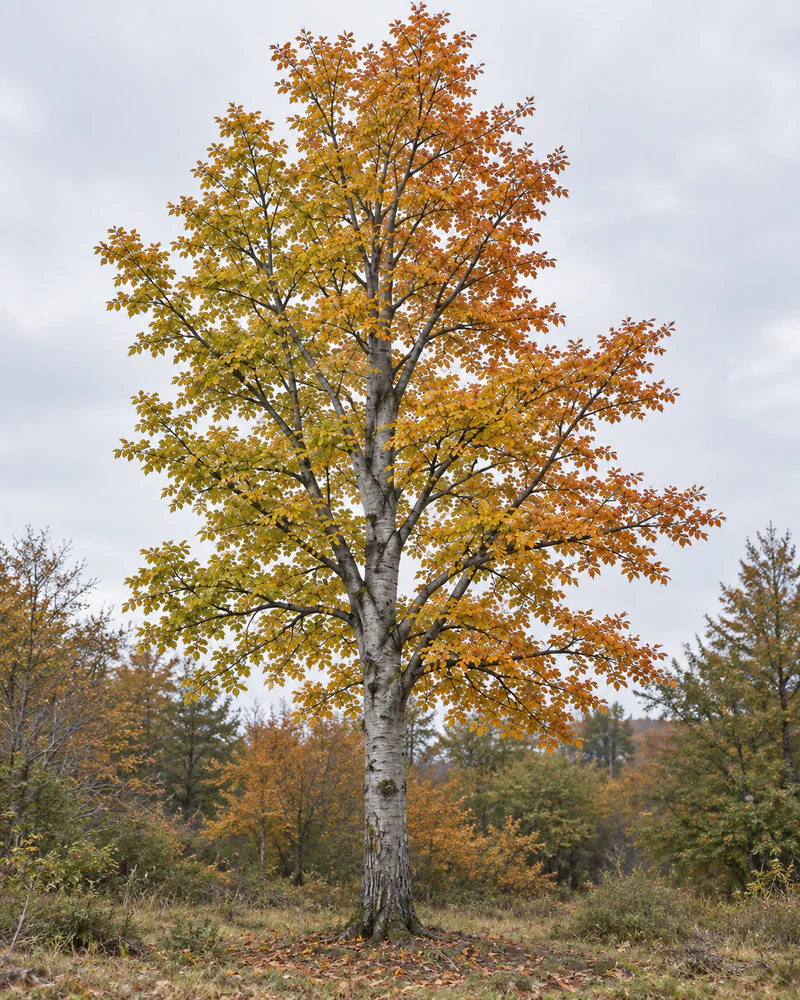
Whole plant
A view of the whole plant. Use the style selector to explore this species as an illustration or a photorealistic image.
The illustrated and photorealistic images were created with AI as visual references. Individual plants may differ in appearance, shape, size, colour and stage of growth.
Tree
Lenga
Nothofagus pumilio
A deciduous tree of cold environments, known for its reddish autumn foliage.
Botanical description
About this species
Lenga forms extensive Andean and southern forests in Chile and Argentina. It is deciduous, with small, lobed leaves that turn from green to yellow and reddish shades in autumn. In exposed sites it can grow low and be shaped by the wind.
Species geography
Natural distribution
Native to ChileForms an extensive natural Andean and southern belt from south-central Chile to Tierra del Fuego, on both sides of the mountains.
Habitat. Mountain and far southern forests, often near the upper tree line.
Chile
- Maule
- Ñuble
- Biobío
- La Araucanía
- Los Ríos
- Los Lagos
- Aysén
- Magallanes
Argentina
- Neuquén
- Río Negro
- Chubut
- Santa Cruz
- Tierra del Fuego
Latitude range: Approximately 35°–56° S
Species profile
Characteristics
- Local name
- Lenga
- Scientific name
- Nothofagus pumilio
- Plant type
- Tree
- Origin
- Native to Chile, also occurring naturally in Argentina.
- Foliage
- Small deciduous leaves with lobed margins.
- Distinctive feature
- Strong yellow to reddish autumn colour.
- Ecological role
- Forms high-elevation and subantarctic forests.
Getting started
Planting and care
Light
Plenty of light in a cool environment; protect young trees from extreme heat and wind.
Watering
Water regularly while roots establish, without saturating the growing medium.
Soil and planting
Cool, well-drained soil. Ask the nursery about suitability for warm or coastal sites.
Suitable conditions depend on the plant’s provenance, soil and microclimate. Check recommendations for your project with the nursery before planting.