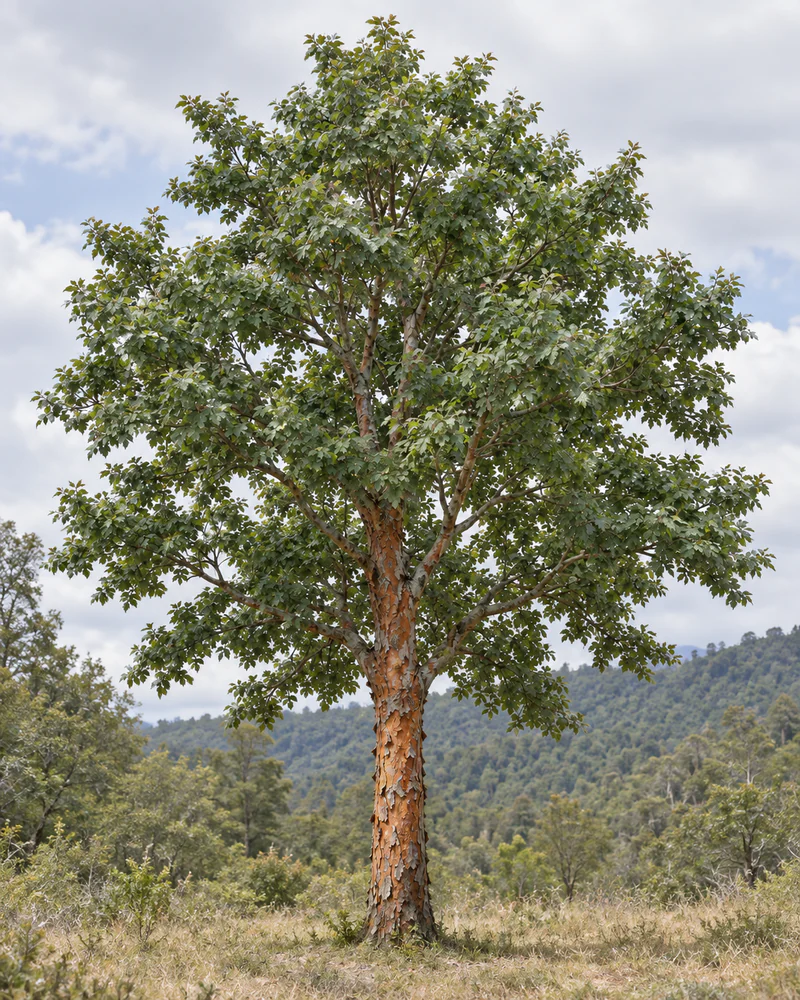
Whole plant
A view of the whole plant. Use the style selector to explore this species as an illustration or a photorealistic image.
The illustrated and photorealistic images were created with AI as visual references. Individual plants may differ in appearance, shape, size, colour and stage of growth.
Tree
Hualo
Nothofagus glauca
A deciduous tree endemic to central Chile, associated with Mediterranean mountain forests.
Botanical description
About this species
Hualo is a deciduous Nothofagus restricted to central Chile. It forms forests in parts of the Cordillera de la Costa and the Andes. Its firm leaves have prominent veins and toothed edges; its fruit is enclosed in woody cupules.
Species geography
Natural distribution
Endemic to ChileIts accepted native range is restricted to central Chile, in mountain populations between Región Metropolitana and Biobío.
Habitat. Deciduous mountain forests of the Cordillera de la Costa and the Andes in central Chile.
Chile
- Metropolitana
- O’Higgins
- Maule
- Ñuble
- Biobío
Record under review. Reported presence in Neuquén is not shown as confirmed.
A historical reference reported hualo at Epu Lauquen, Neuquén, but a later floristic survey did not find it. UdeC and Kew restrict its native range to Chile; Neuquén is therefore left unshaded.
Latitude range: Approximately 33°–37° S
Species profile
Characteristics
- Local name
- Hualo
- Scientific name
- Nothofagus glauca
- Plant type
- Tree
- Origin
- Endemic to Chile.
- Foliage
- Firm deciduous leaves with prominent veins.
- Distinctive feature
- Toothed leaves and fruit protected by cupules.
- Ecological role
- A structural species in remnant Mediterranean forests.
Getting started
Planting and care
Light
Sun or light partial shade, with gradual acclimatisation after transplanting.
Watering
Moderate watering while establishing; space it out once rooted, according to the site.
Soil and planting
Good drainage is preferred. Avoid compacted soil and adapt care to the local climate.
Suitable conditions depend on the plant’s provenance, soil and microclimate. Check recommendations for your project with the nursery before planting.